|
|
| How
Do I Make ... ? |
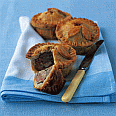
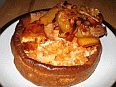
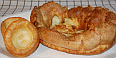
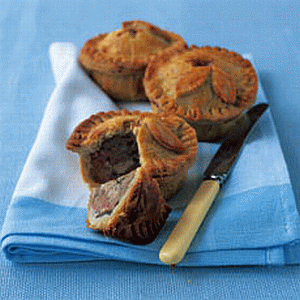
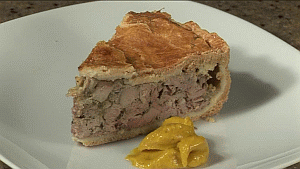
Pork Pie |
|
Pork Pies, as well as most
other types of pie are virtually impossible to find
in Southeast China (Outside of Hong Kong of course),
and specialist Western restaurants that make their own.
Pork Pies are fairly easy to make, although recipes
can vary. However, do not expect the results to be a
rosy pink, as with Butcher's own pork pies, these here
will probably turn out gray in colour. Adding a little
Saltpetre [Potassium nitrite (E249)] should solve this
problem, that is if you want to add this dubious chemical
to your mix?
Recipe Source:
 |
Rick Stein, Padstow, England |
|
|
| Websites: |
We actually found this recipe in
a reply by Jennifer Bartholomew here:
All Experts - British Cuisine where she adds
her own tips.
Later we discovered the same recipe on the BBC
food guide here
Rick Stein's own website is here: www.rickstein.com
We have the greatest respect for Rick both as
a Chef, and as a person we have had direct contact
with. We reproduce this recipe under Collective
Commons licence, as it was freely available on
the internet. Thank you Rick. |
|
| |
Quick Tips:
1.
When adding the jelly, be patient and by adding
a little at a time, continue until the casing is completely
filled. This can take a long time! A small funnel may
make this easier (China Expats).
2. Tom
Stanley recommends you make the jelly the day before
and set aside somewhere cool. This improves the taste
dramatically!
3. You can also make
a nice jelly from tinned stock and gelatin rather than
boiling pig's trotters to get it (Jennifer Bartholomew).
4. Most recipes given make one large
pork pie. You can use muffin casings to make individual
ones instead (Delia Smith).
5. For
a hard side crust and base, simply remove pies from
casings and place on greaseproof paper, then return
to the oven for the final cooking (Delia Smith). |
|
| Let's get started:-
Rick Stein's Pork Pie |
| Ingredients: |
|
| |
For the jelly:
900g/2lb pork bones
1 pig's trotter
1 carrot
1 onion
1 bouquet garni (celery, bay leaf, thyme and parsley)
12 black peppercorns
4 cloves
For the filling:
1.2kg/2½ lb boned pork shoulder
225g/8oz lean bacon
1 tbsp chopped fresh sage
2.5ml/½ tsp each ground mace, freshly grated nutmeg
and ground allspice
2 tsp anchovy essence
salt and freshly ground black pepper
For the pastry:
450g/1lb plain flour
1 tsp salt
275g/10oz chilled butter, cut into pieces
3 free-range eggs, plus 1 free-range egg yolk
2-3 tbsp cold water |
| Method |
|
The Jelly:
1.
For the jelly, put all of the jelly ingredients
into a large pan, cover with water and bring to
the boil. Cover and simmer gently for three hours.
2. Strain through a very
fine sieve into a clean pan and boil vigorously
until reduced to 600ml/1 pint. Season to taste
and leave to cool.
The Filling:
3. To make the filling, cut the
pork and bacon into 1cm/½in pieces. Put half of
the pork and 55g/2oz of the bacon into a food
processor and process using the pulse button until
coarsely chopped.
4. Scrape
into a bowl and stir in the rest of the diced
pork, bacon herbs, spices, anchovy essence, one
teaspoon of salt and some freshly ground black
pepper.
5. Fry a little piece
of the mixture in sunflower oil, taste and adjust
the seasoning if necessary.
The
Pastry:
6. To make
the pastry, sift the flour and salt into a food
processor or mixing bowl. Rub in the butter until
the mixture looks like fine breadcrumbs.
7.
Beat 2 of the whole eggs with the egg
yolk and water and gradually stir into the dry
ingredients to make a soft dough. Knead briefly
until smooth then cut off one third of the mixture
and set it aside for the lid.
8.
Roll out the larger piece and use to line the
base and sides of a 20cm/8in clip-sided cake tin,
leaving the excess pastry overhanging the edges.
9. Preheat the oven to 200C/400F/Gas
6.
Make the Pie:
10. To assemble the pie, spoon
the pork filling into the pastry-lined tin and
slightly round the top of the mixture to give
the finished pie a nice shape.
11.
Beat the remaining egg in a bowl. Brush
the edge of the pastry with beaten egg. Roll out
the remaining pastry and use to cover the top
of the pie.
12. Cut a small
hole into the centre of the lid with a small ovenproof
pastry cutter, remove the plug of pastry and leave
the cutter in place to retain the hole during
baking.
13. Brush with more
beaten egg and decorate with a twisted rope of
pastry and pastry leaves. Brush the top with any
remaining beaten egg.
14. Bake
the pie in the oven for 30 minutes, then lower
the oven temperature to 180C/350F/Gas 4 and continue
to cook for a further 1½ hours, loosely covering
the pie with a triple-thickness sheet of greaseproof
paper once it is nicely browned.
Add
the Jelly:
15. Finally,
remove the pie from the oven and leave to cool
for 2 hours. Then warm through the jelly and pour
into the pie through the hole in the top. Remove
cutter used to make the hole in the top. Leave
to go cold overnight. |
|
| |
Taiwanese Pepper Pork Pie |
 |
 |
Dear Editor,
My name is Jean and I’m the Editor at Jen Reviews. I
was doing research on pork pie recipes and just finished
reading your wonderful blog post: http://www.china-expats.com/HowTo_PorkPie.htm
[this page]
In that article, I noticed that you cited a solid post
that I’ve read in the past: https://www.deliaonline.com/recipes/type-of-dish/picnic-recipes/old-fashioned-raised-pork-pies
[below]
We just published a delicious
Taiwanese pepper pork pie recipe complete with step-by-step
pictures and detailed instructions. You can
find it here: https://www.jenreviews.com/pork-pie/
Keep up the great work!
Warmly,
Jean |
Note:
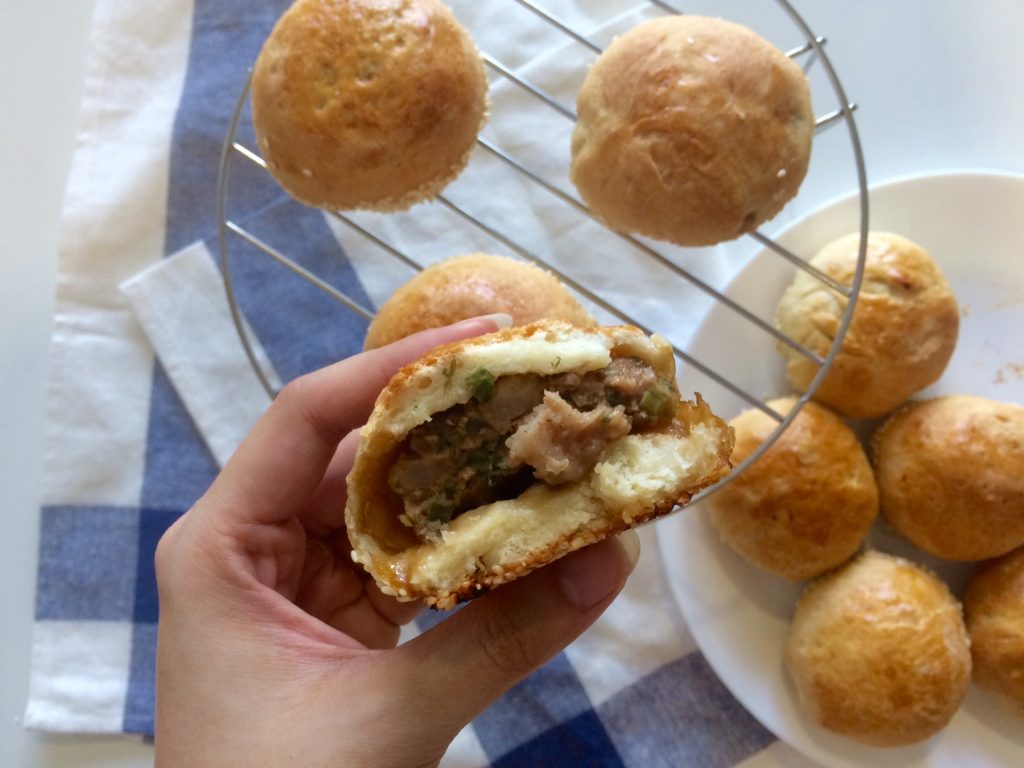
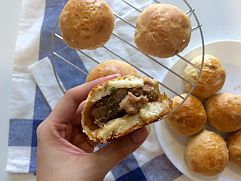
Taiwanese pepper pork pie or Hu Jiao Bing
are famous in China, and are pastries filled with
a mixture of pork, scallions (spring onions), fragrant
aromatics, and white pepper. |
| |
| Feedback -
You can add comments in our Guestbook |
| Reader Comments: |
Message
from Tom Stanley:
12.12.2010 @ 15.29
Hi there- As you may know, I am not an ex pat
but i found your site while looking for a super
duper recipe for a genuine curry sauce and yours
is just the job. I also looked with interest at
the bit from rick stein on the pork pie recipe(not
his recipe tho-another one he stole!)I would like
to add my tuppenceworth if you don't mind. My
tip is to make the pies at roughly half the size
that stein recommends and, here is the best bit;
in order to eat them at their best, make your
jelly well in advance of the pies (maybe the previous
day)and; once your pies are ready; heat the jelly
and pour only a small amount into the pie-leave
for 5 mins. then try not to eat the whole lot-i
dare you!
Just as an addendum, i would like to say that
i originally got the idea to do this with pork
pies after i'd bought and tasted some fantastic
little minced beef pies made in a similar fashion
but i don't have a recipe for them. Perhaps you
might cast your internet and see if anyone has.
good luck and seasons greetings to you and yours.
Tom. |
|
| |
|
| Additional Recipes
and Information: |
|
 |
This is where we originally found the above
recipe contributed by Jennifer Bartholomew. Jennifer
is a chef from London, England, who is keen on
preserving traditional English cuisine. The website
offers additional tips for making Rick's recipe. |
|
| |
 |
This website offers an excellent video
walkthrough ideal for first-timer's. The recipe
given is also slightly different, as they use
a composite jelly mix instead of boiling pig's
trotters. The other ingredients also vary slightly,
and are aimed at reproducing a Melton Mowbray
Pork Pie. |
|
| |
 |
Another interesting website that gives a lot
of historical information concerning pork pies.
The recipe is also different again, and whilst
similar to those above, may suit beginners rather
than connoisseurs better. There is also an entertaining
paragraph in Cockney rhyming slang. |
|
| |
 |
Delia offers yet another recipe, this time
aimed at making individual pork pies using a muffin
tin. One major difference appears to be that the
cooking time is reduced, although there is slightly
more preparation time.
It is well worth reading Delia's method, as she
offers several very useful tips, together with
the ones we have reproduced here. However, this
recipe does not include jelly - which we consider
to be a fundamental ingredient of a good pork
pie. |
|
|
| China Expats Summary: |
|
| We would recommend you stick
with Rick Stein's excellent recipe, and interpolate
from the other sources listed here, which offer their
own unique insights into the art of pork pie making.
We made individual pies ourselves, and added a hint
of salt to the final jelly before filling the pies.
This really made the jelly taste great! However, it
really is worth making the jelly from pig's trotters. |
|
| Once you have mastered the
basic recipe, why not try adding other meats - as can
be found displayed in a good Butcher's Shop and some
supermarkets? You can also put a hard boiled egg in
the middle of larger pies. Some recipes advocate making
the pastry with milk, but we suggest you do not. You
can use a smear of lard to line the casings for a real
country pork pie taste, especially useful if browning
all crusts as in Delia's method. |
|
| You will definitely
need some form of oven to cook this dish. Whilst not
easy to find in China, most larger supermarkets and
electrical retailers will supply something suitable.
However, please ensure you get one with a temperature
control, and that heats to 200 degrees C. If you have
the luxury of choice, we recommend you buy one that
heats from the bottom, not the top. Otherwise preheat
a slab of marble or granite, and place the cooking vessel
on this. Cover the top as necessary to prevent burning
in top heated cookers. Otherwise we found all the ingredients
in Chinese supermarkets and wet markets in Foshan City. |
|
| These pies are fresh and
without preservatives, therefore keep them refrigerated
and expect to eat them within a couple of days. We presume
you can freeze them? |
|
|
This information is as supplied by ourselves, and ably
supported by our friends and various internet portals.
In addition we personally wish to thank Rick
Stein for sharing with us all his excellent skills
and recipe. |
|
| Food Ideas |
| Boy
Cooking |
 |
| Béchamel Related |



|
| British
Recipes |
|
| Descriptions |
|
| Chinese Recipes |
|
|